Four research fields built on carbon nanotube (CNT) polymer composites.
All four fields start from the same material: CNT/polymer composites whose electrical resistance changes under tension, compression and impact.
CNT smart materials
Carbon nanotubes are combined with polyurethane or epoxy to make conductive composites. They are coated, molded or screen-printed, and the CNT network inside changes its electrical resistance as the material is stretched, compressed or struck.
Topics
- CNT/polymer composite design (polyurethane, epoxy)
- Fabrication by coating, molding and screen-printing
- Resistance response under tensile, compression and impact load
From the lab’s research slides
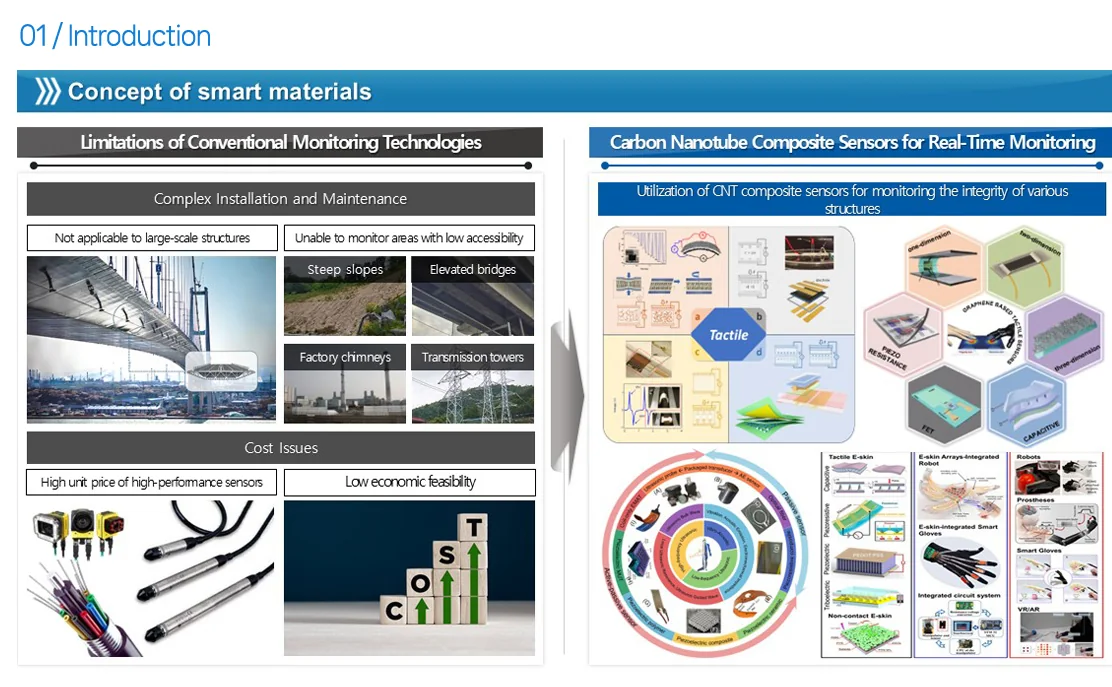
Concept of smart materials: limits of conventional monitoring and CNT composite sensors 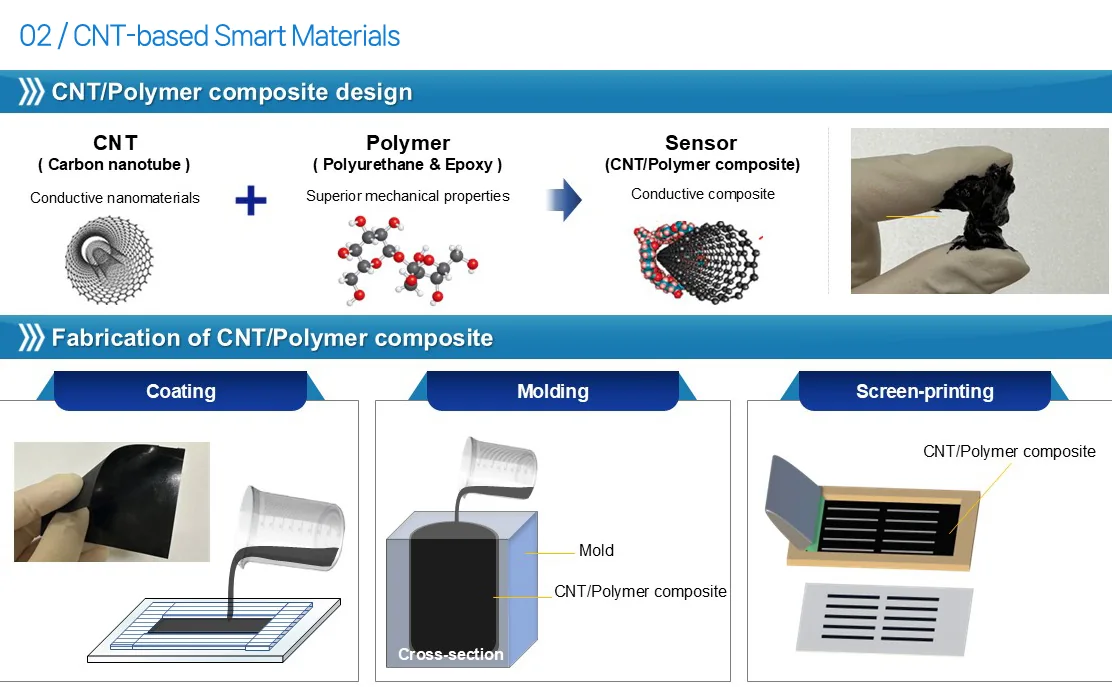
CNT/polymer composite design and fabrication by coating, molding and screen-printing 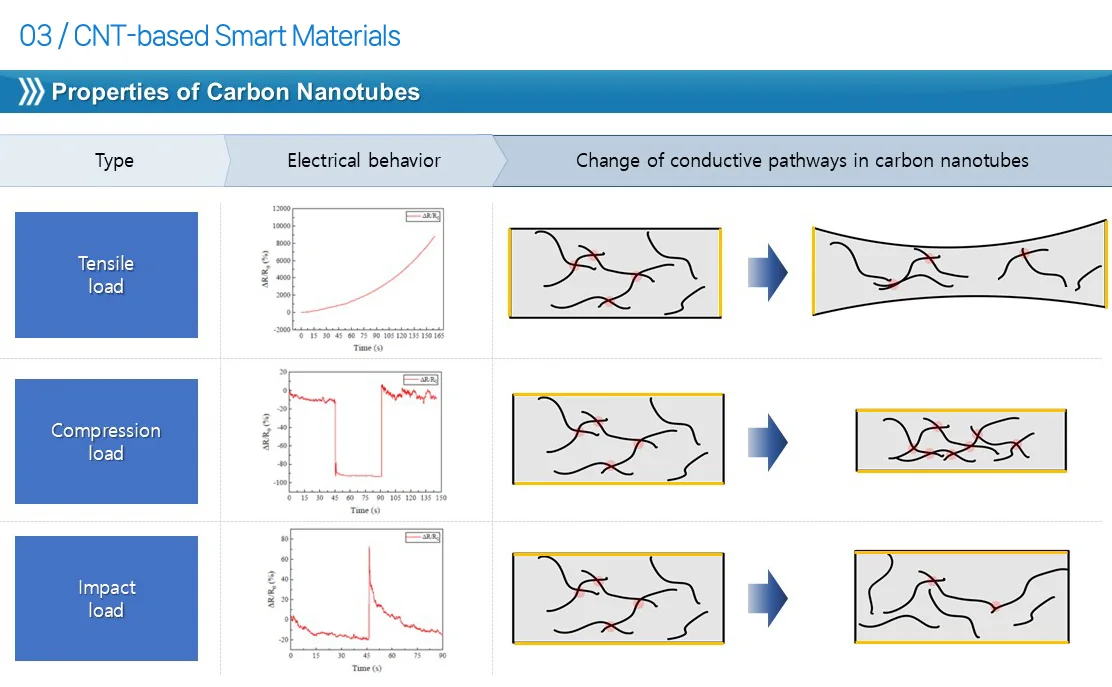
Resistance response of CNT networks under tensile, compression and impact load
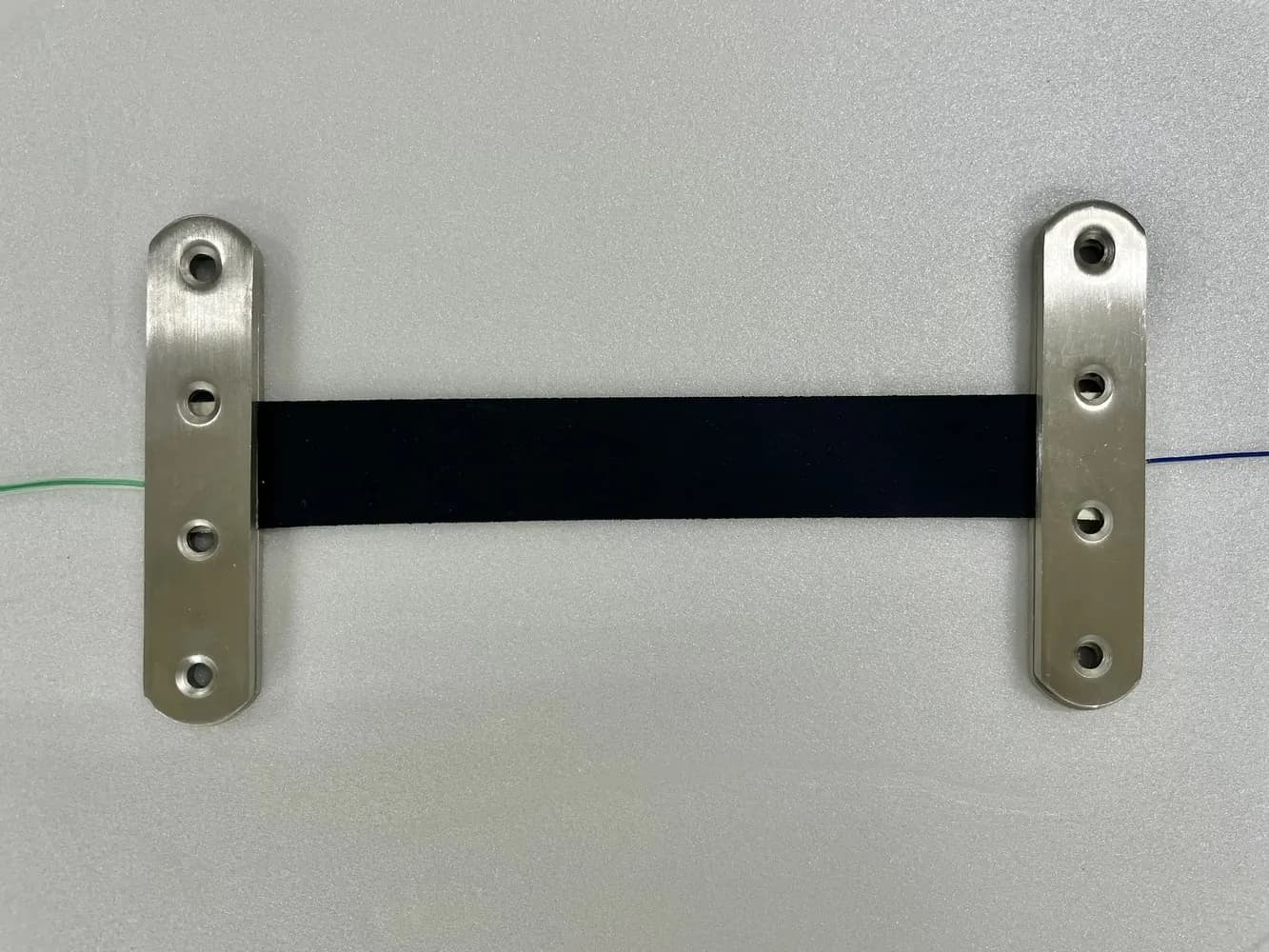
CNT sensor film on a test jig
Structural health monitoring
CNT sensors are coated directly onto reinforced concrete or attached as sheets to detect cracks, including a joule heating-based method read with a thermal camera. Sensors and a monitoring system were installed on the Papermill Bridge in Maryland, USA. The work extends to CNT/epoxy composite bars inside concrete and a conductive repair material for potholes.
Topics
- Crack detection with coated and sheet-type sensors
- Joule heating-based crack detection with thermal imaging
- Bridge behavior monitoring — Papermill Bridge, Maryland, USA
- CNT/epoxy composite bars in concrete
- Conductive repair material for roads
From the lab’s research slides
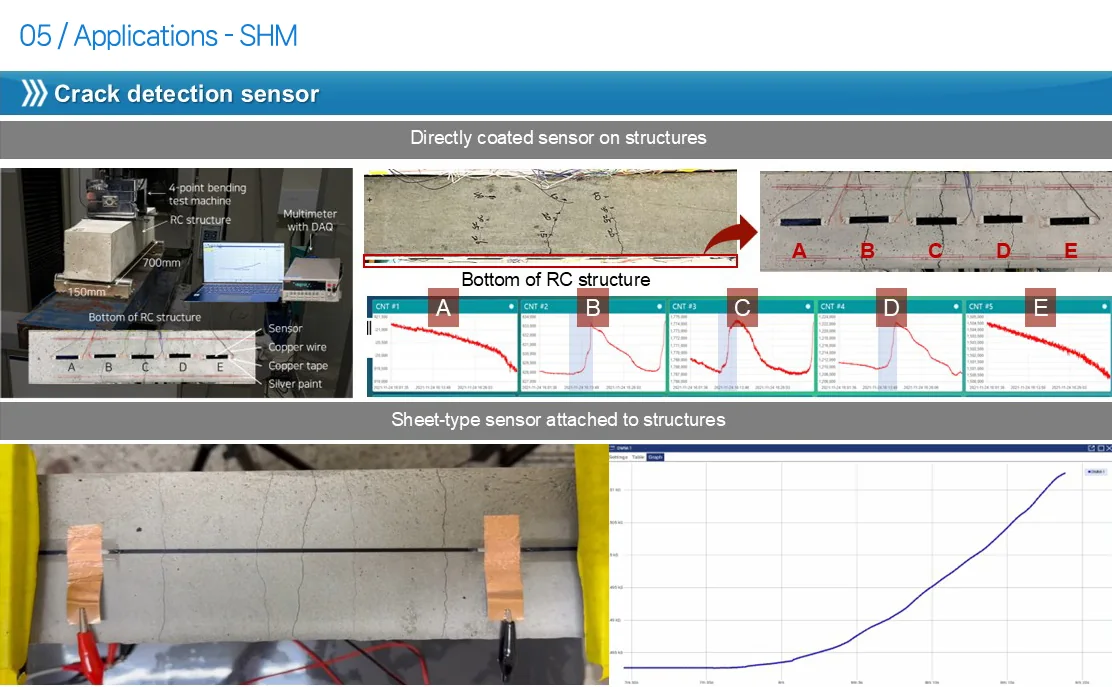
Crack detection sensor coated on a reinforced concrete beam 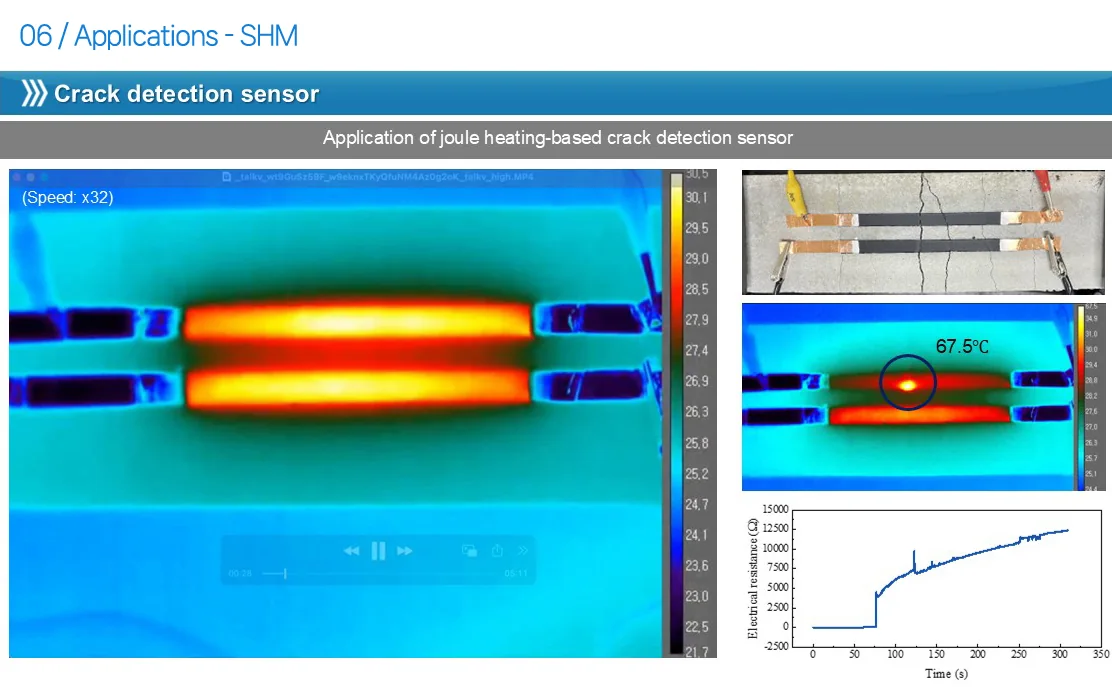
Joule heating-based crack detection with thermal imaging 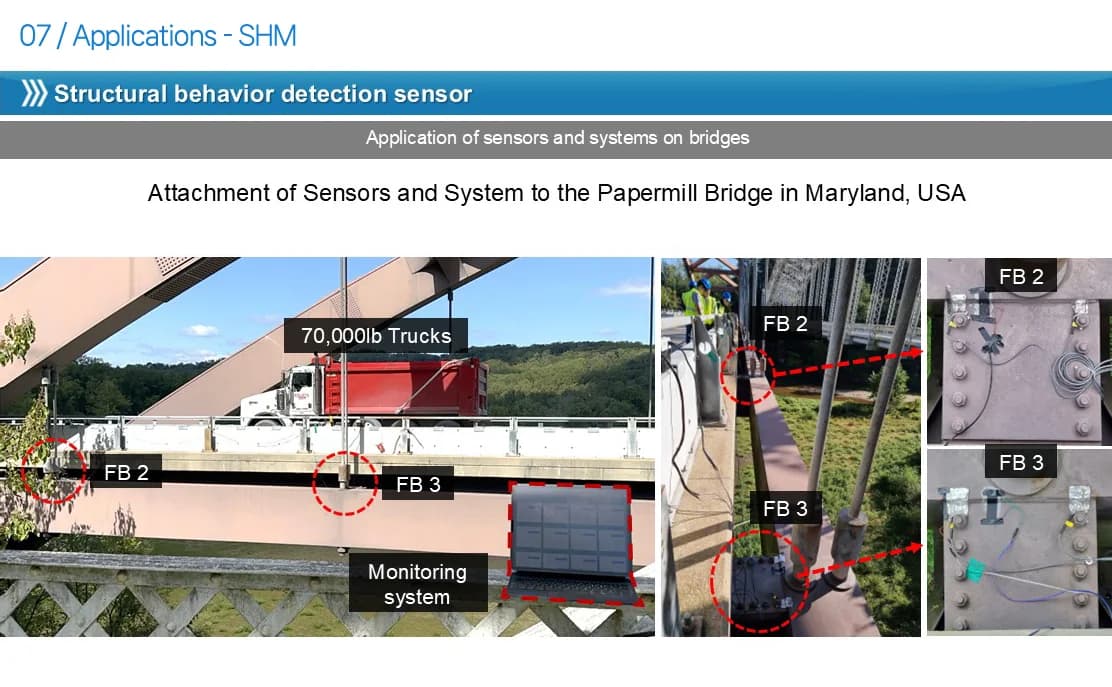
Sensors and monitoring system installed on the Papermill Bridge, Maryland, USA 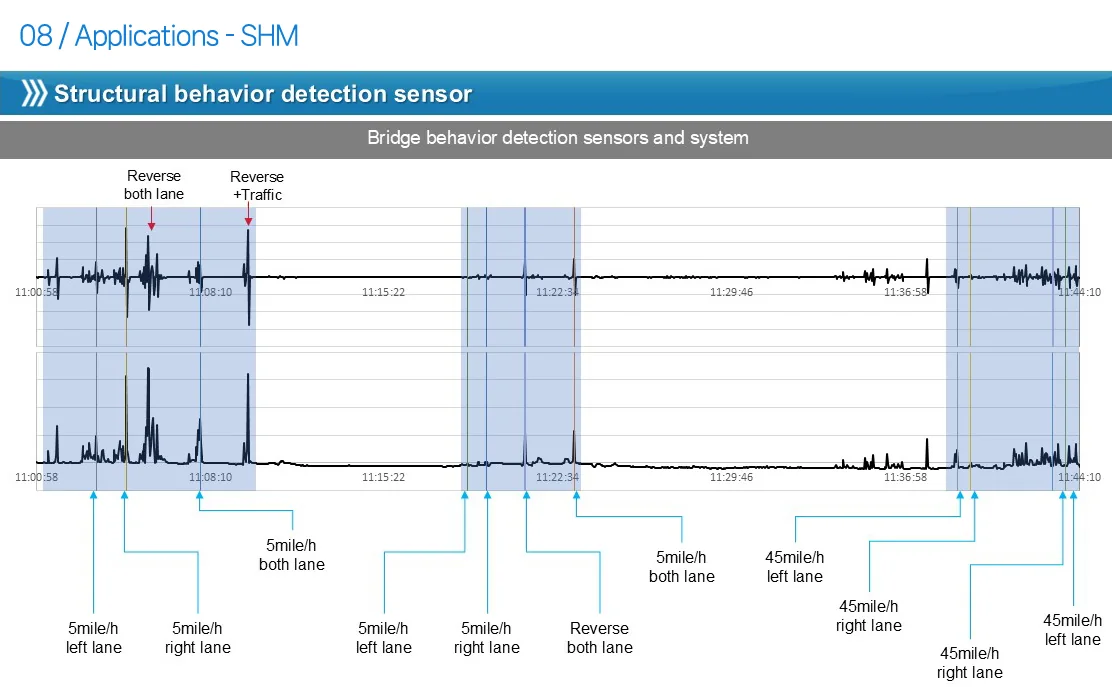
Bridge behavior signals by lane, speed and traffic 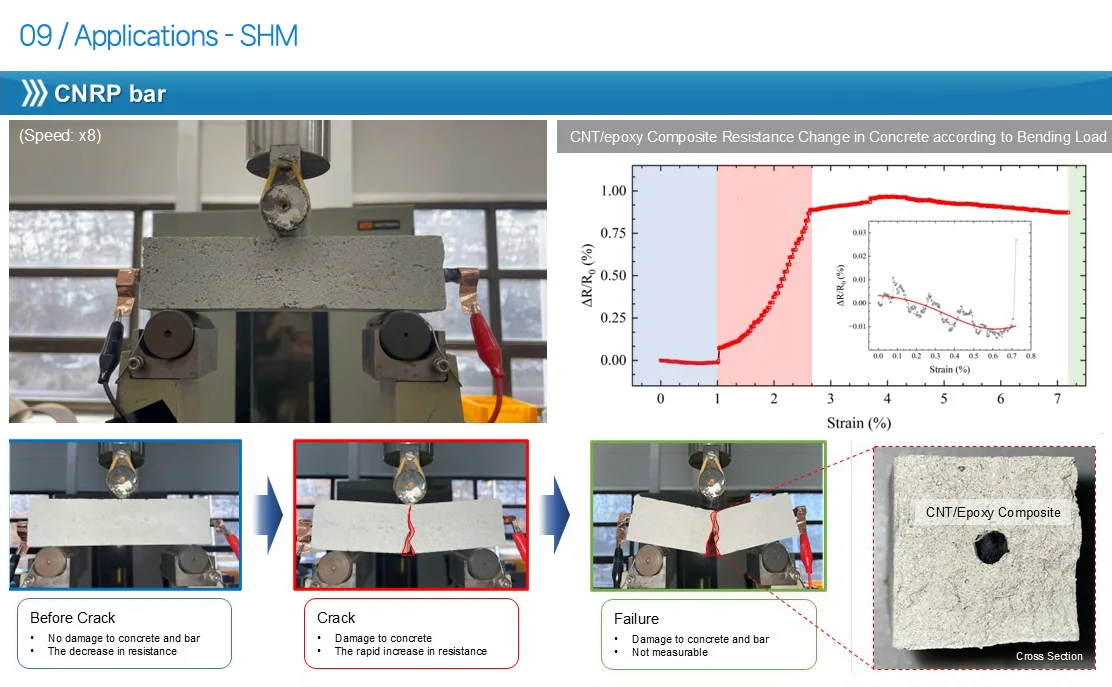
CNT/epoxy composite bar: resistance change through crack and failure 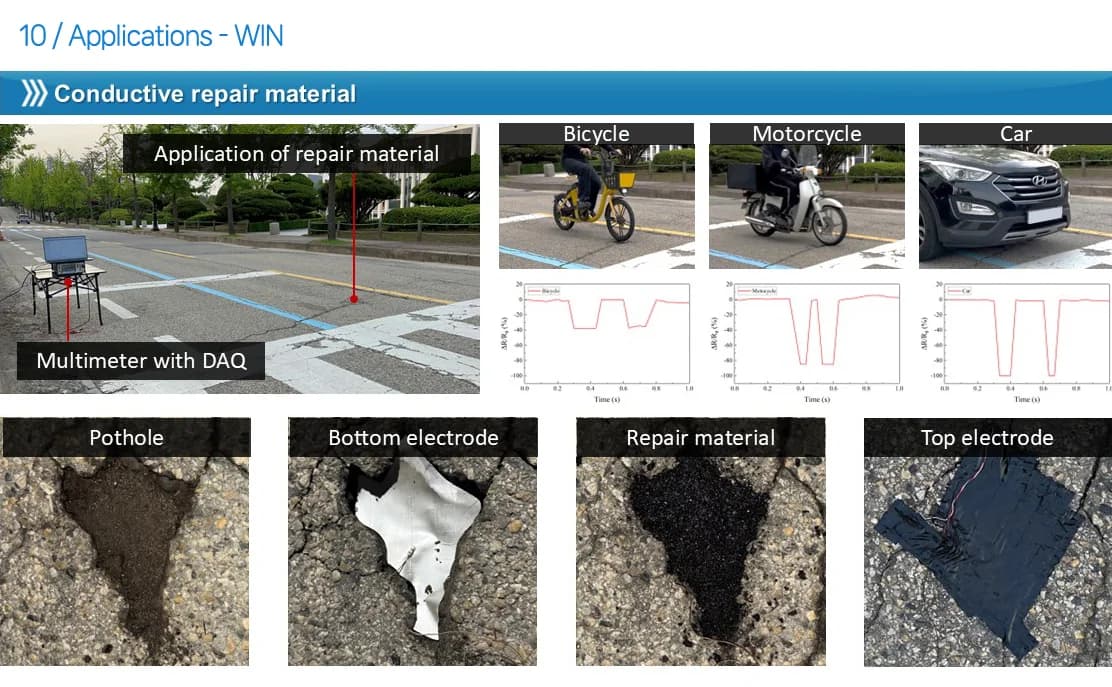
Conductive repair material for potholes, loaded by bicycle, motorcycle and car
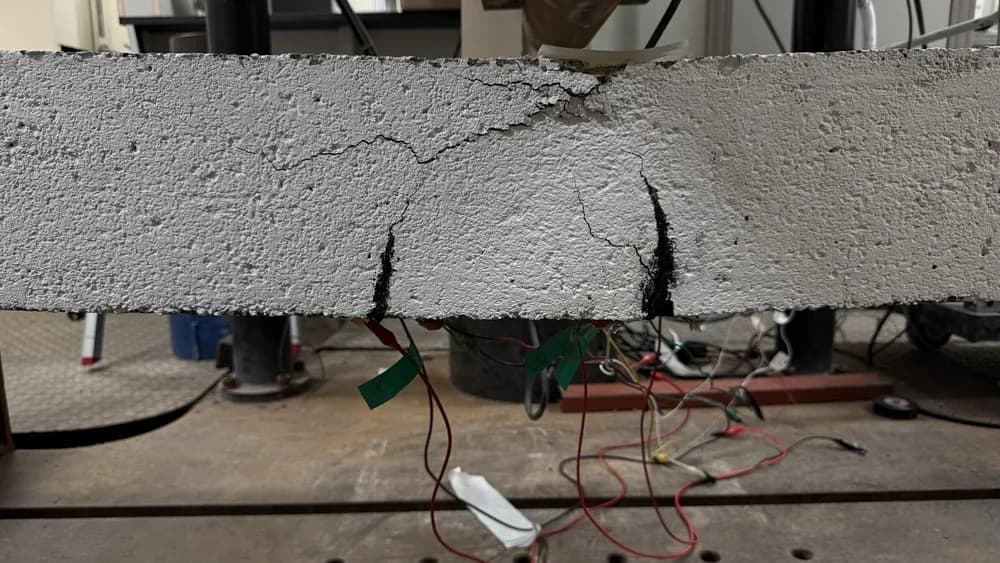
Cracked RC beam with CNT sensors 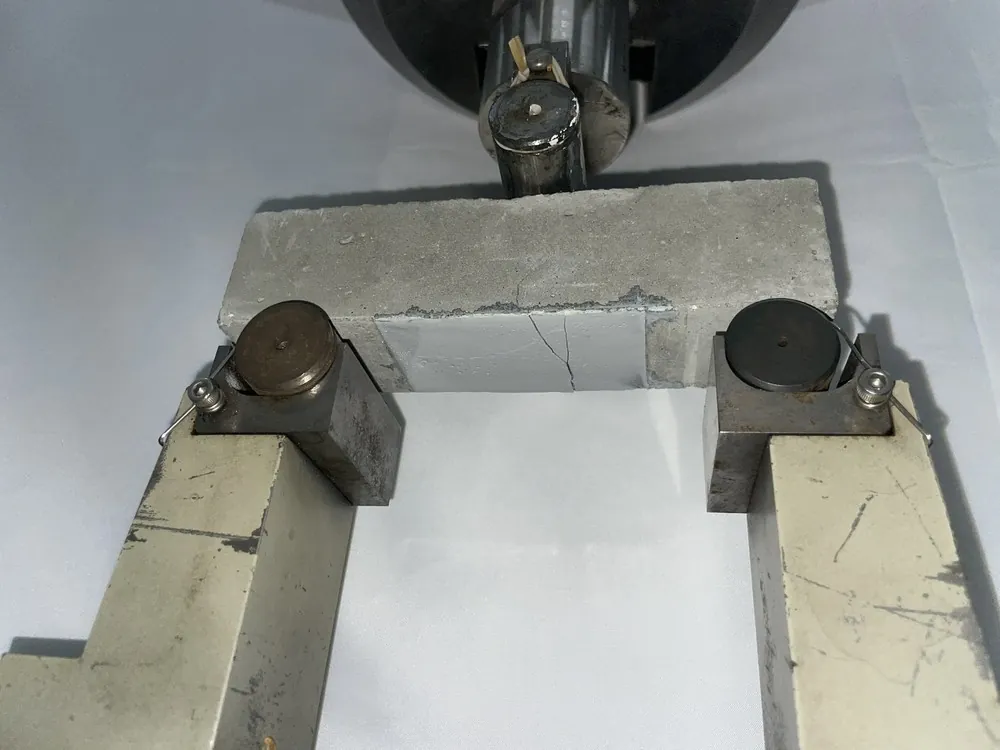
Four-point bending test
Smart load-sensing surfaces
A multi-sensing system drives a 48 × 48 pressure-sensing matrix through multi-channel excitation and ADC cards, processes the signals on FPGAs and sends them to a PC through an MCU. On a smart wall it maps palm pressure and hammer impacts; on a smart floor it follows two people crossing and detects a fall.
Topics
- Multi-sensing system with a 48 × 48 pressure-sensing matrix
- Smart wall — palm pressure and hammer impact
- Smart floor — walking and fall detection
From the lab’s research slides
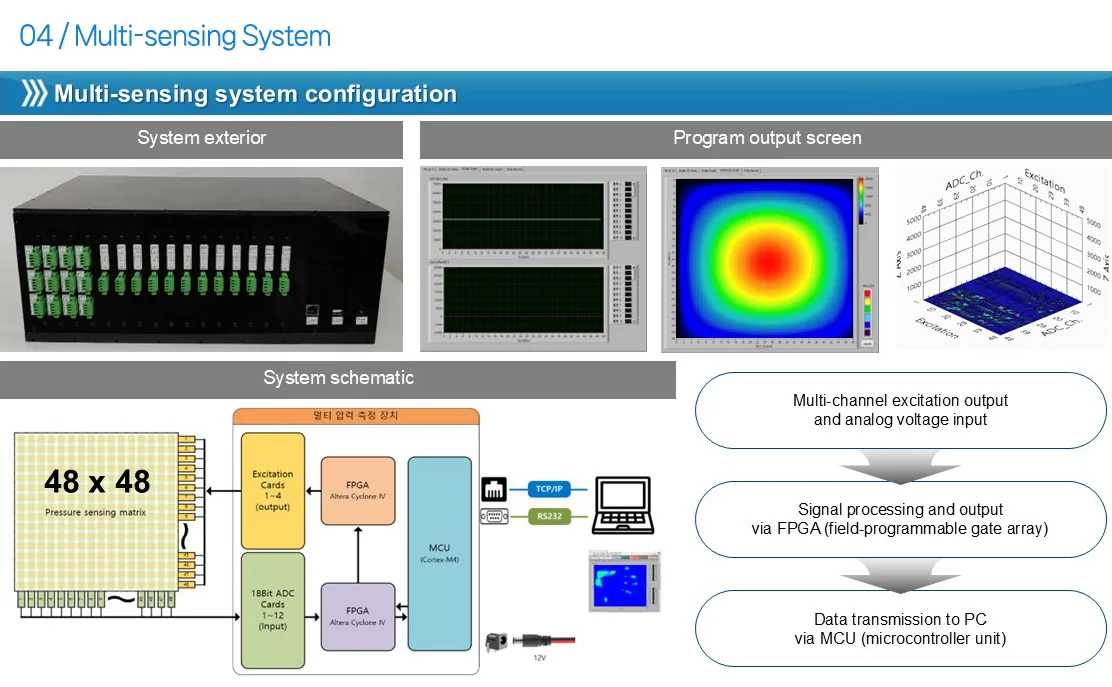
Multi-sensing system with a 48 × 48 pressure matrix and FPGA signal processing 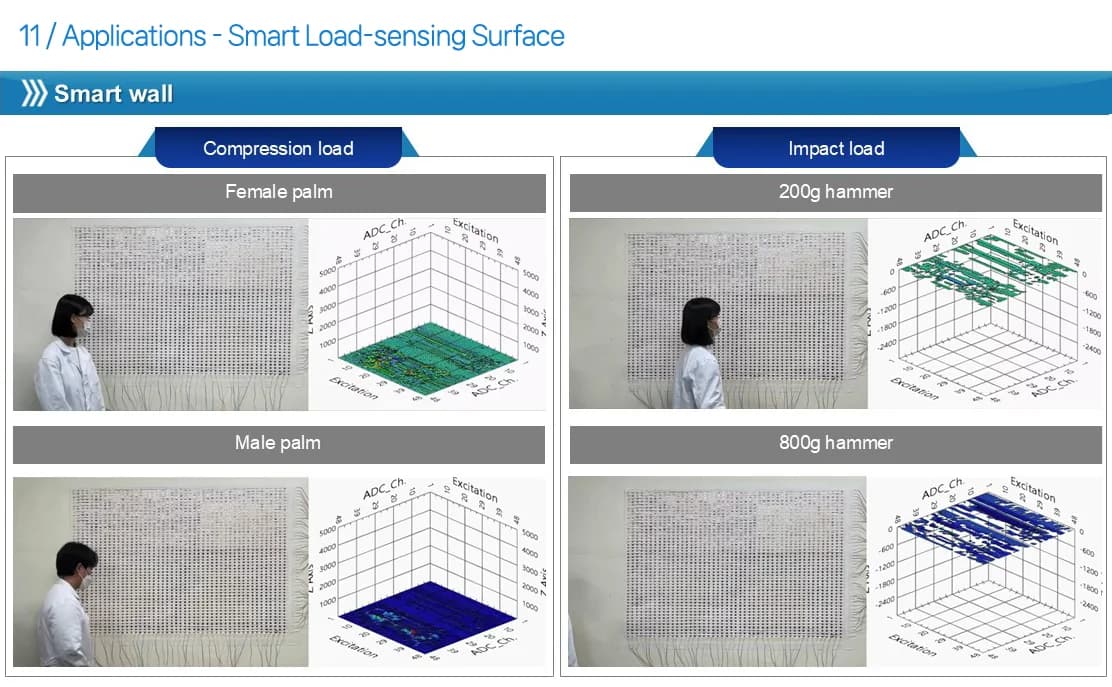
Smart wall: compression and impact load maps 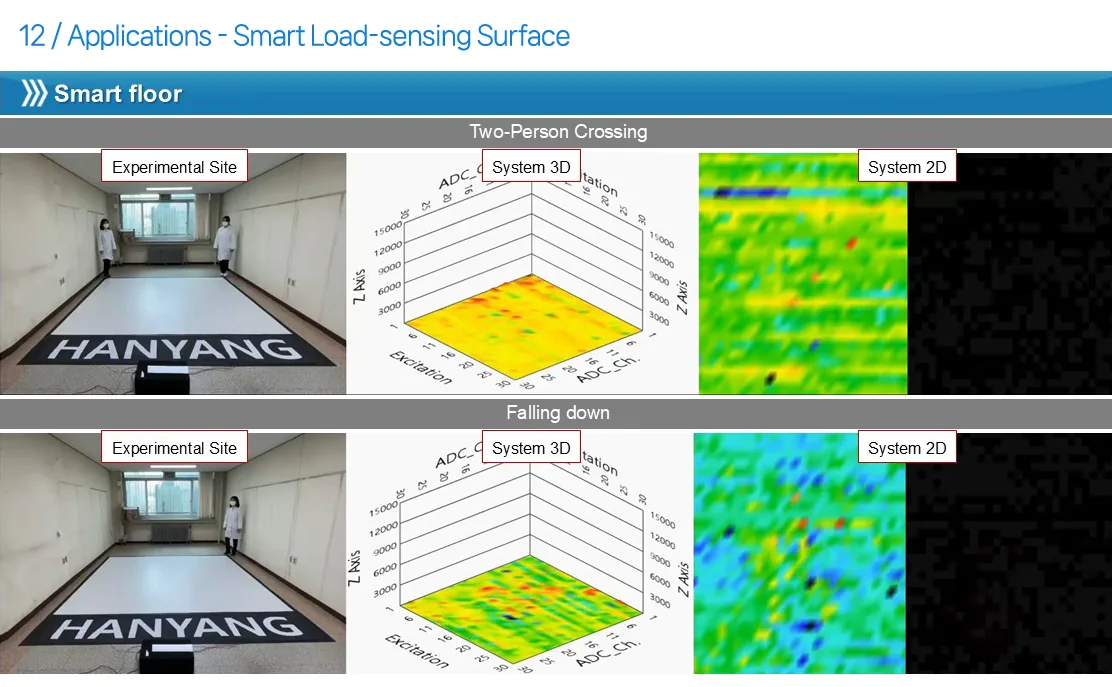
Smart floor: two-person crossing and fall detection
Ultra-thin sensors for safety monitoring
An ultra-thin CNT sensor monitors battery packs for impact and thermal events. The same kind of sensor, fitted to a safety helmet with a microcontroller and a multiplexed sensor array, detects impacts on the worker.
Topics
- Battery safety monitoring — impact and thermal events
- Worker safety helmets — impact detection
Battery cell monitoring continues at Prof. Jang’s spin-off company as E-CNTShield.
innovateus.aiFrom the lab’s research slides
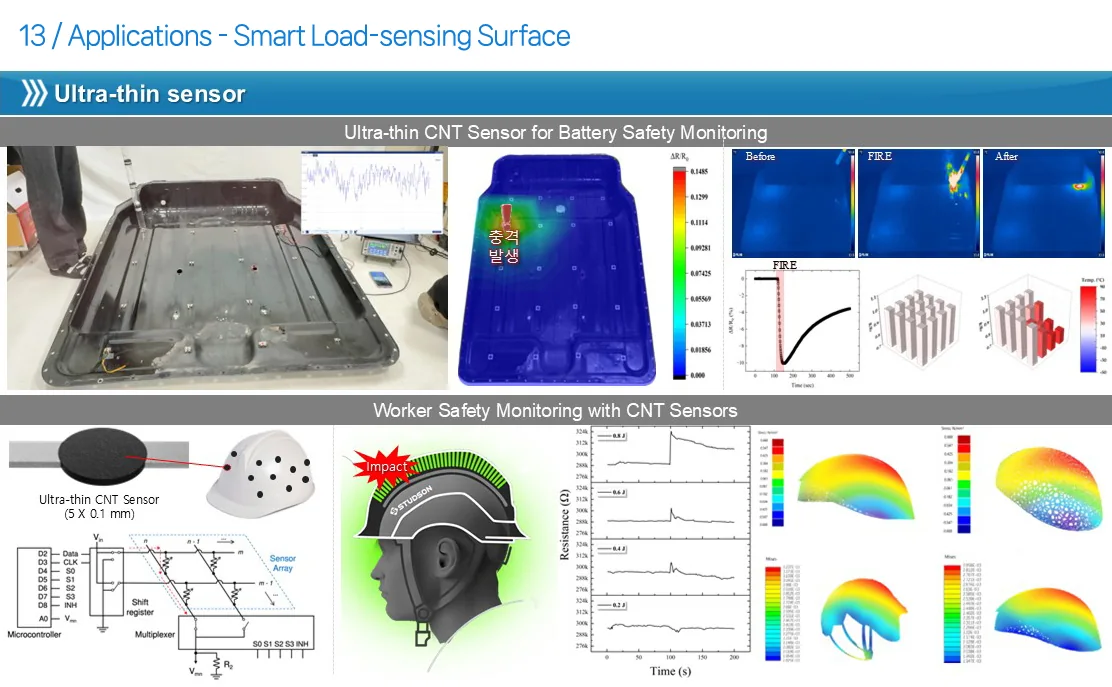
Ultra-thin CNT sensor for battery safety monitoring and worker helmets